
How Long Does a Roof Last? Lifespan by Material in New England
· By Roxaco Roofing
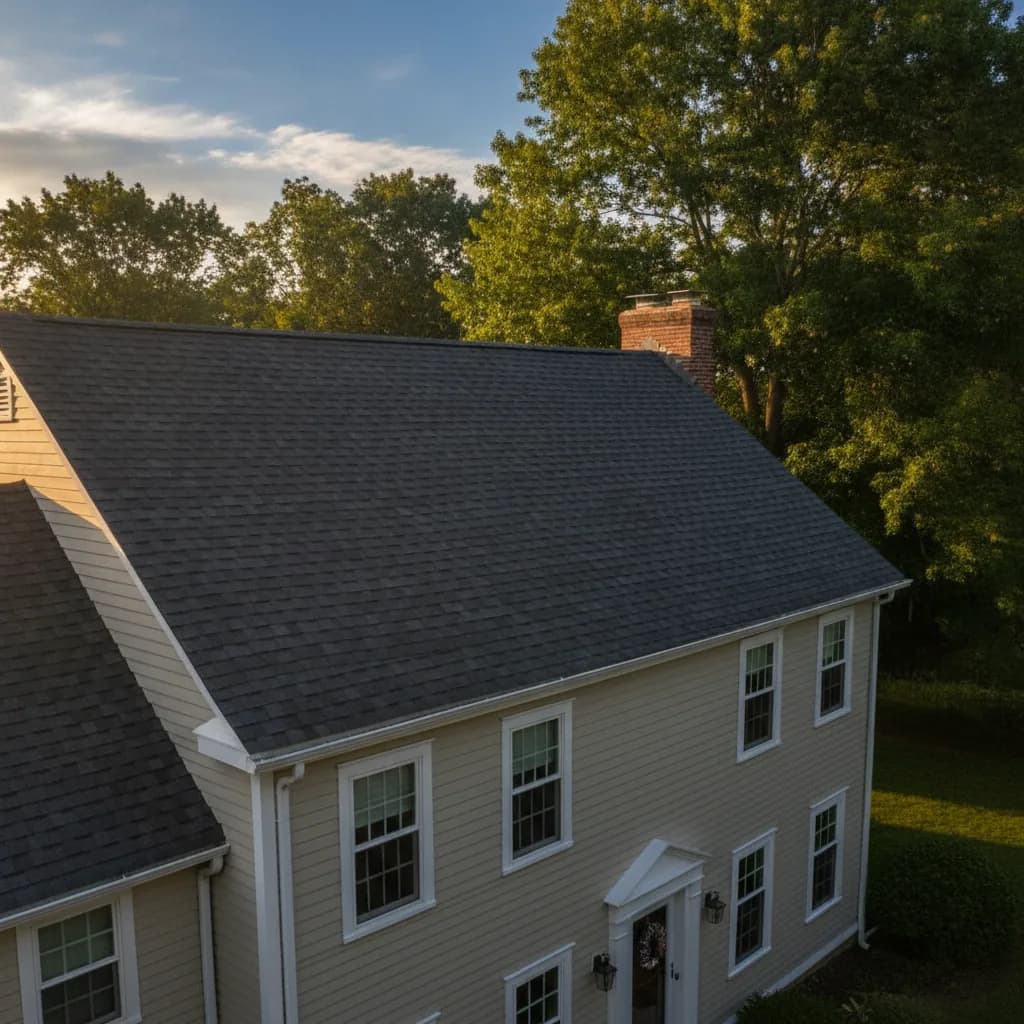
How long does a roof last? It is one of the first questions homeowners ask, usually because they just bought a house, spotted a worn patch, or want to plan ahead before a leak forces the decision for them. The honest answer is that it depends, mostly on the material you have, the climate it faces, and how well it was installed and maintained.
A roof is not a single lifespan number you can look up and trust for every home. The same shingle can last 30 years on a well-ventilated, well-built roof and fail in 15 on a poorly installed one. This guide breaks down the typical ranges by material, explains why New England weather is so hard on roofs, and shows what actually adds years to the roof over your head.
Typical roof lifespan by material
Every roofing material ages differently, and the ranges below are general market estimates for a well-installed, reasonably maintained roof. Your actual lifespan can land higher or lower depending on ventilation, sun exposure, and install quality. Three-tab asphalt shingles, the thinner, flat-looking budget option, typically last around 15 to 20 years. They are the most affordable choice up front, but they wear faster and hold up less well to wind than heavier shingles.
Architectural asphalt shingles, the thicker, dimensional shingles most homeowners choose today, generally last about 25 to 30 years, and premium lines can stretch further. A quality architectural shingle from a manufacturer like GAF or CertainTeed carries a strong long-term warranty and performs well through New England winters, which is why it is the practical, proven pick for most homes in the region.
Metal roofing sits at the top for longevity. A properly installed standing-seam or metal-panel roof can typically last 40 to 70 years, sheds snow well, and resists wind and fire. Flat and low-slope roofs use membrane systems instead of shingles: EPDM (a rubber membrane) usually lasts around 20 to 30 years, and TPO (a single-ply thermoplastic membrane) generally runs about 20 to 30 years as well, with performance tied closely to how carefully the seams and flashings were installed.
Why New England weather shortens a roof life
The lifespan ranges above assume a normal climate, and New England is anything but easy on a roof. The single biggest stress is the freeze-thaw cycle. Water works into small gaps and cracks, freezes overnight, expands, and pries them wider, then thaws and repeats. Over a winter of repeated cycles, that quietly loosens shingles, opens flashing seams, and wears at the roof faster than a milder climate ever would.
Ice dams are the other winter threat. When heat escapes into the attic and melts snow on the roof, the water runs down to the cold eaves and refreezes into a ridge of ice. That dam backs up melting water under the shingles, where it can soak the decking and leak into the home. A roof that suffers ice dams year after year ages far faster than its material rating suggests.
Summer and storms take their own toll. Intense sun and UV exposure bake the oils out of asphalt shingles over time, making them brittle and prone to cracking. High winds from coastal and inland storms lift shingles and break the seal that keeps water out, even when nothing blows off. Across Massachusetts, Connecticut, and Rhode Island, all of these forces work on a roof at once, which is why a shingle rated for 30 years may need attention sooner here than the box promises.
The role of ventilation and attic health
Ventilation is the quiet factor that decides whether a roof reaches its full lifespan or falls well short. A roof needs balanced airflow, intake vents low at the eaves and exhaust vents high at the ridge, so air moves continuously through the attic. When that airflow is missing or blocked, the roof pays for it in both summer and winter.
In summer, a poorly ventilated attic traps heat that can climb well past outdoor temperatures. That trapped heat cooks the shingles from below, accelerating the UV damage happening on top and shortening the life of the whole roof. In winter, a warm attic melts the snow on the roof unevenly, which is exactly what feeds the ice dams described above. Proper ventilation keeps the roof deck closer to the outside temperature and helps prevent that cycle.
Attic health goes hand in hand with ventilation. Adequate insulation keeps household heat where it belongs instead of leaking up to the roof, and a working vapor barrier keeps moisture out of the attic so it does not condense on the wood and rot the decking from underneath. A roof over a healthy, well-ventilated attic simply lasts longer, which is why a good roofer looks at the attic, not just the shingles.
Why a bad install fails early
Material rating is only half the story. The best shingle in the world will fail early if it is installed poorly, and installation is where a lot of roofs quietly lose years. Nails driven too high, too low, or overdriven so they cut through the shingle all weaken the roof from the start. Missing or improperly layered ice-and-water shield along the eaves and valleys leaves the most leak-prone areas exposed to exactly the freeze-thaw and ice-dam conditions New England is known for.
Flashing is another common shortcut. The metal that seals around chimneys, valleys, skylights, and vents does the hardest work on the roof, and when it is reused, poorly cut, or skipped, those spots become the first to leak, often years before the field shingles would have. Cheap or inadequate underlayment and skipped ventilation upgrades are other corners that get cut to win a job on price, and each one shaves life off the finished roof.
This is why the installer matters as much as the material. Roxaco Roofing is GAF and CertainTeed certified, which means the crew is trained to the manufacturer standards that keep those long warranties valid, and most residential roofs are completed in a single day so the home is not left open to the weather. A roof built right, with proper flashing, ice-and-water shield, and ventilation, earns the full lifespan its material promises instead of failing halfway through it.
Signs your roof is near the end
A roof rarely fails overnight. It sends signals for years, and knowing them helps you plan a replacement on your terms instead of scrambling after a leak. The clearest one is age combined with visible wear. If your asphalt roof is past 20 to 25 years and you are seeing problems, it is likely nearing the end rather than needing another patch.
Look for shingles that are curling at the edges, cracked, buckling, or missing, especially across the whole roof rather than in one spot. Check your gutters for piles of coarse, sandy granules, the protective coating washing off aging shingles. Inside, watch for water stains on ceilings, damp or musty insulation in the attic, and any visible sag in the roofline, which is a serious sign the decking underneath may be compromised.
When these signs show up in isolation, a repair often solves the problem. When they show up together across an aging roof, they usually mean the roof is worn out as a system, and repair after repair only buys time. If you are not sure which situation you are in, a free inspection gives you an honest read, and Roxaco Roofing will recommend a repair when a repair is genuinely enough.
How to get the full life out of your roof
The good news is that much of a roof lifespan is within your control. Regular maintenance is the biggest lever. Keeping gutters clean so water drains properly, trimming overhanging branches that scrape shingles and drop debris, and clearing leaves and moss off the roof surface all prevent the slow damage that shortens a roof year after year.
Seasonal inspections matter just as much in this climate. A quick look after major wind or ice storms catches lifted shingles and loosened flashing before they turn into leaks, and an annual check finds small problems while they are still small and cheap to fix. Addressing a single cracked shingle or a bit of pulled flashing today is far less costly than replacing rot-damaged decking later.
Ventilation and attic health, covered above, deserve a spot on the maintenance list too, since a well-ventilated attic protects the roof from both summer heat and winter ice. Do these consistently and a quality roof will reach, and often beat, the top of its expected range. If you would like a professional read on how much life your roof has left, Roxaco Roofing offers a free, no-pressure estimate across Massachusetts, Connecticut, and Rhode Island. Call (508) 745-8237 to schedule.
Frequently asked questions
- How long does a roof last on average?
- It depends on the material. Three-tab asphalt shingles typically last around 15 to 20 years, architectural asphalt shingles about 25 to 30, and metal roofing 40 to 70 years. Flat-roof membranes like EPDM and TPO generally run about 20 to 30 years. In New England, weather and install quality can push those numbers lower, so age plus visible wear is a better guide than the material rating alone.
- Why does New England weather shorten a roof life?
- The freeze-thaw cycle repeatedly expands water inside small cracks and gaps, loosening shingles and flashing over the winter. Ice dams back water up under the shingles, and summer sun bakes asphalt brittle. Together, those forces can make a shingle rated for 30 years need attention sooner across Massachusetts, Connecticut, and Rhode Island.
- Does attic ventilation really affect how long a roof lasts?
- Yes, more than most homeowners expect. A poorly ventilated attic traps summer heat that cooks the shingles from below, and in winter it melts snow unevenly, which feeds ice dams. Balanced intake and exhaust ventilation keeps the roof deck closer to the outside temperature and helps the roof reach its full expected lifespan.
- Can a roof fail before its expected lifespan?
- Absolutely. A poor installation is the most common reason. Overdriven nails, missing ice-and-water shield, reused or badly cut flashing, and skipped ventilation all shave years off a roof, sometimes causing leaks long before the shingles themselves wear out. That is why a certified, careful installer matters as much as the material you choose.
- How can I make my roof last longer?
- Keep gutters clean, trim overhanging branches, and clear debris and moss off the surface. Have the roof inspected after major storms and once a year so small problems get fixed before they spread, and make sure the attic is properly ventilated and insulated. Consistent upkeep helps a quality roof reach, and often beat, the top of its expected range.
Related services
Serving
Ready for an exact price?
Get a free, no-pressure in-home estimate. Real numbers for your home, not a phone guess.